By the End of the Trip, You’re Already Somewhere Else

And then it was over.
One of the great tragedies of life is that we are all immortal until proven otherwise.1
We don’t live with death in the same way as people did in the past, as we don’t confront mortality as constantly. For most of human history, people have lived with war, famine, and very few possessions, and they knew that everything was impermanent. Their constant companions were hunger, thirst, battle, exile, conflict, uncertainty. They yearned for the opposite: a state of peace, plenty, where everything they could possibly need was taken care of and they did not want.
So people invented imaginary lands – Heaven, Nirvana, Valhalla, Svarga, Jannah, Garothman, Gan Eden, Takamagahara - where things were permanent, and they had all of the necessities they could hope for, and they yearned for these lands, because the world as they knew it was none of these things. In our daily life, we have order and predictability – at least, compared to 99.99999% of our ancestors. What we have today, what we take for granted, is what people throughout history have wanted more than anything else. We live, really, in a world of near-permanent abundance.
And we expect that what we have will last – in a good way (indestructible plastic Nalgene water bottles, for example) and a bad way (plastic, generally). This expectation of permanence applies to everything. We live, really, in a synthetic bubble, where we expect what was here yesterday to be here today and here tomorrow. If anything seems like it might threaten this permanence, we get shook.
But when that happens, when something dislodges us from our reverie and reminds us that this too shall pass, it is eustress - it makes us stronger. We need these reminders.
Travel is a way to impart eustress in an intentional way.
And one of the things about travel is that is so magical is that it reminds us of the impermanence of…well, all of our daily experiences. In a new place, we are suddenly reminded that:
There is a world outside of our normal and immediate bubble;
Virtually every other person in the world doesn’t know or care about us;
Everything ends, and soon, we will have to say goodbye – to people, places, things.
And life itself.
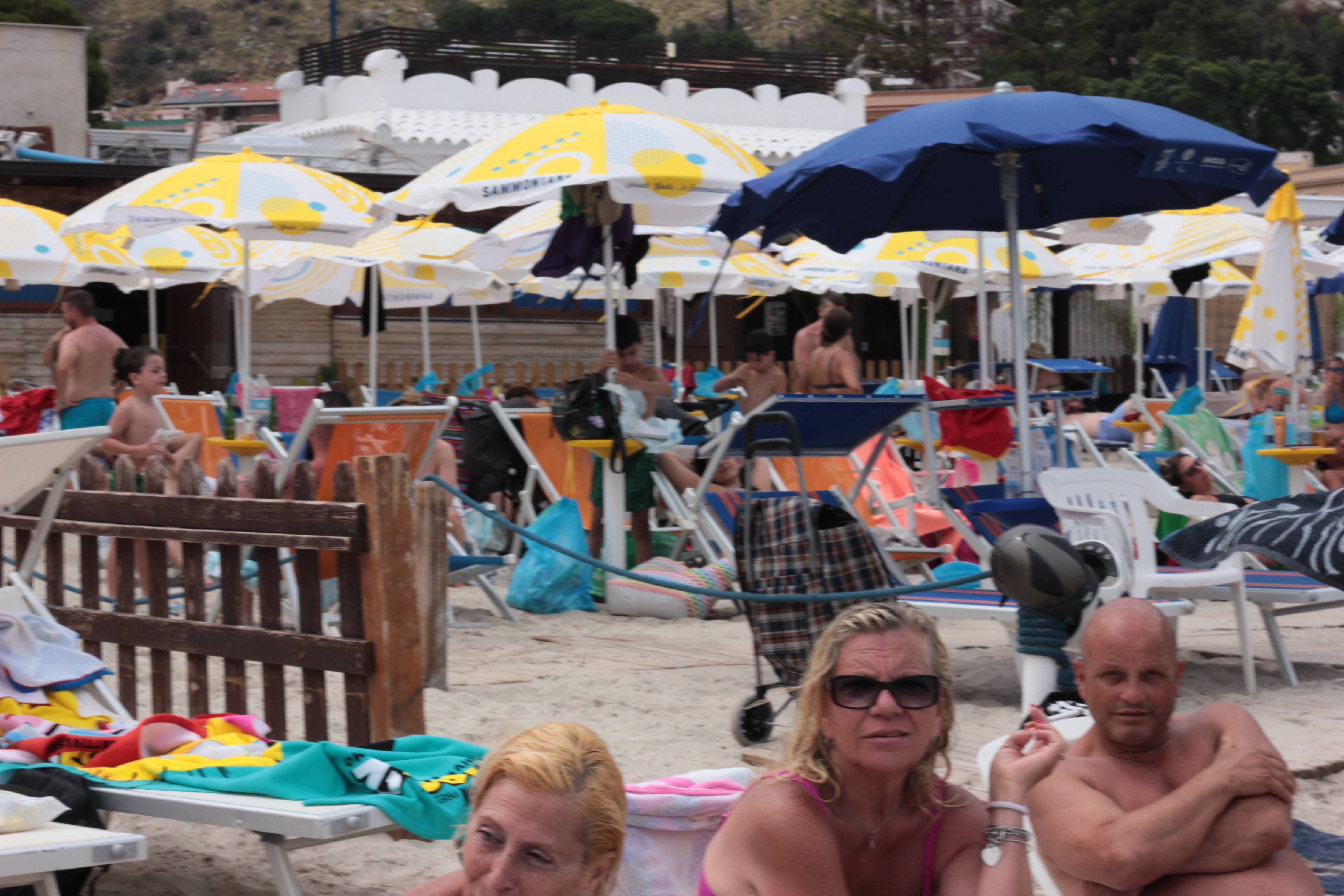
On our last day in Palermo, we took the 806 to Mondelo Bay. Marcello met us and showed us to our beach umbrellas. We bought roasted corn on the cob from the old man who showed up every morning at 11 a.m. to walk back and forth at the edge of the island, chanting the same words over and over to the sea and the sand, with his 30-something son pulling the giant plastic cooler that left flat tracks in the sand, and we rented a pedal boat from the nice family who always remembered that the boys love wearing lifejackets. I swam around the pier just before noon, treading water 20 yards out to listen to children doing cannonballs from the old wooden beams, then got toasted caprese sandwiches and mushroom arancini at La Lunette, and I thanked the woman who never smiled for always looking after us, which made her smile and call the chef out so that we could shake hands one last time. Under the umbrellas, I ordered a “Birra Messina cristalli di sale per favore,” and the teenager stopped, looked at me through his sunglasses, and said, in English, “You have a really good accent.” We got the 806 home, taking four seats in the back facing each other as the bus picked up teenagers and families until the aisles were Tetrissed with bare shoulders and smelled of sunscreen and sweat, and it would be the same the next day, and the day after that, and on and on perhaps for eternity, but never again with us on board as witnesses.
At the last stop on the line, we got out and walked slowly to Dolce Capo. We got cones and sat on the patio across the street. I went in for a second cone and two Germans with black North Face backpacks were going back and forth over what to get, and I helped them order because the woman behind the counter was getting impatient with them holding up the line.
We packed. As I layered things in my bag, I made a list of souvenirs. They were,
From Milan:
Ten Muji notebooks, which became a written record of the trip;
One “ABRACADABRA” tote bag (sent to Bianca);
Post-Its from a stationary shop, used for planning.
From Bologna:
A half-burned candle from a nunnery we stayed at;
One corkscrew advertising the “Castellana Grotte” caves in Apullia, which we did not visit;
A red “Leonardo” inkwell and a stick of sealing wax, also red, from the pen shop;
Two packets of pepper seeds from the botanical gardens, which are growing on my windowsill as I type this.
From Florence:
One half-marathon shirt from Lucca, a race that they didn’t let me run;
One green Bianchi water bottle, found next to a dirt trail while I was running a substitute self-created half-marathon;
A 1963 tourist map of Florence, found in the street on my way back from the gym, showing that there had been no change in the layout over the last 62 years;
“Hair paste” from a corner store;
Perfumes from a small perfumer to make me smell like a 1972 Fiat 500 convertible driving from Positano to Arienzo in April;
A chef knife, purchased when the knives in our kitchen had the sturdiness of paper; Proraso shaving soap; two shoe brushes (one for Daniel alone, one for me and Nicholas to share); burgundy Saphir shoe polish and Saphir Creme Universalle, and a stick of “Victor” deoderant from a general store in Florence;
Be like the Fox (a gift from Meredith, a biography of Machiavelli arguing that The Prince was actually a satire.
From Rome:
One extra-soft toothbrush;
“Several” tubes of Italian toothpaste;
One Marconi straight razor (circa 1910) from the Rome flea market, which is now the only razor I use;
One small moonstone found in a crack near the Spanish Steps in Rome;
One silk pocket square, found in the Borghese gardens in Rome;
One sailcloth backpack from the Trastevere flea market;
One bar of Trader Joe’s soap, brought by my dad as a present from California.
From Sorrento:
MyPompeii annual pass from Pompeii;
One spatula, as the apartment had brand-new pots and pans but no cooking utensils;
Laundry soap, because our apartment didn’t have a washing machine;
Three Roman coins and one Roman nail, found in the dirt near the swing set in a playground;
Three wooden wine crates, found on the side of the road during a short run;
One chunk of marble, found on the side of the road during a long run.
From Palermo:
Assorted nautical strings collected from the bottom of Mondello Bay;
Two pearl earrings (unmatching) (“Those are pearls that were his eyes”) from the bottom of Mondello Bay;
Two friendship bracelets from the shore of Mondello Bay (one sent to Bianca and now lost forever, one which is still on my right wrist);
Assorted seashells from Mondello Bay;
One Speedo-style bathing suit, purchased as a replacement when my old suit ripped obscenely during a swim;
One brass belt buckle, found floating with a pair of Levi’s size 38x32 in Mondello Bay;
A box of marzipan fruit from the convent bakery, sent to my sister;
Two bottle openers from a flea market, one advertising a San Pelligrino drink that was only made in the 1950s (which we use almost daily) and one advertising what appears to be a fake business set up as a mafia front (sent to my sister);
Four 1920s school dip pens from a flea market (two sent to my sister and Bianca, two kept);
1930s English pen nibs from the flea market, €5 for a box of about 100, which are incredibly frustrating to use;
One shoe horn from a 1930s shoe store that appears to have been bombed to smithereens during the war, bought at the flea market;
Persol glasses frames (in honor of Sonny);
One stick of red sealing wax from the stationer run by the three septuagenarians who never seemed to have any other customers;
Two litres of vino sfuso - one red and one white - from Palermo and Mondello, which nearly sent me over my luggage weight limit;
One green shopping token from the Famila grocery store that someone had left in a trolley, and which we used every day;
Two meters of Sicilian fabric from the cloth market, to be made into lampshades and napkins and patches for ripped garments;
Two Morretino coffee cans, purchased from the puppet museum, one which still holds espresso beans, one given to my brother-in-law;
One extremely long rolling pin from a flea market.
Plus:
Eighteen plant cuttings, carried home in a water bottle and propagated;
Stickers from every city we visited, all mosaicked on my water bottle.
If anyone asks you if you would rather take a bus or a train from Palermo to Catania, take a train. The bus is hot, crowded, and has a toilet that, while technically functioning, smells so strongly of month-old sewage that nobody will use it after the first person opens the door and floods the cabin with the stench. You do get to see the center of Sicily, though, which, at the height of summer and under a cloudless sky, is a manifestation of Eliot:
Here is no water but only rock
Rock and no water and the sandy road
The road winding above among the mountains
Which are mountains of rock without water
If there were water we should stop and drink
Amongst the rock one cannot stop or think
Sweat is dry and feet are in the sand
If there were only water amongst the rock
Dead mountain mouth of carious teeth that cannot spit
Here one can neither stand nor lie nor sit
There is not even silence in the mountains
But dry sterile thunder without rain
There is not even solitude in the mountains
But red sullen faces sneer and snarl
From doors of mudcracked houses
The middle of Sicily is like the Wild West – small villages perched on far-off hilltops separated by a Hobbesian hell. I grew up in Southern California, where the “reclaimed” desert was so parched that my friends’ homes burned in our near-annual wildfires, but Sicily made our San Diego sagebrush suburb look like a rain forest. Occasionally, we’d catch a glimpse of livestock huddled in the shade of an orangebrown sheet of corrugated iron, or a shack (not mudcracked, but not far off) that looked uninhabited save for the tricycle laying in the dust outside of an open doorway, wheels still spinning, but other than that, it would have been hard for anything but lizards and snakes to survive. Between the rare outposts, everything seemed subject to rapid desiccation.
And then you enter Catania, at the base of Etna, and it is beautiful – like a wealthy, non-bombed Palermo. There are tiled squares and air conditioned cultural centres, gushing fountains, a stunning cathedral, reasonably good gelato, the most elegant jewelry store I’ve ever seen, extraordinarily narrow streets, tiny restaurants full of plants, and encampments of refugees hoping to make it across to the boot.
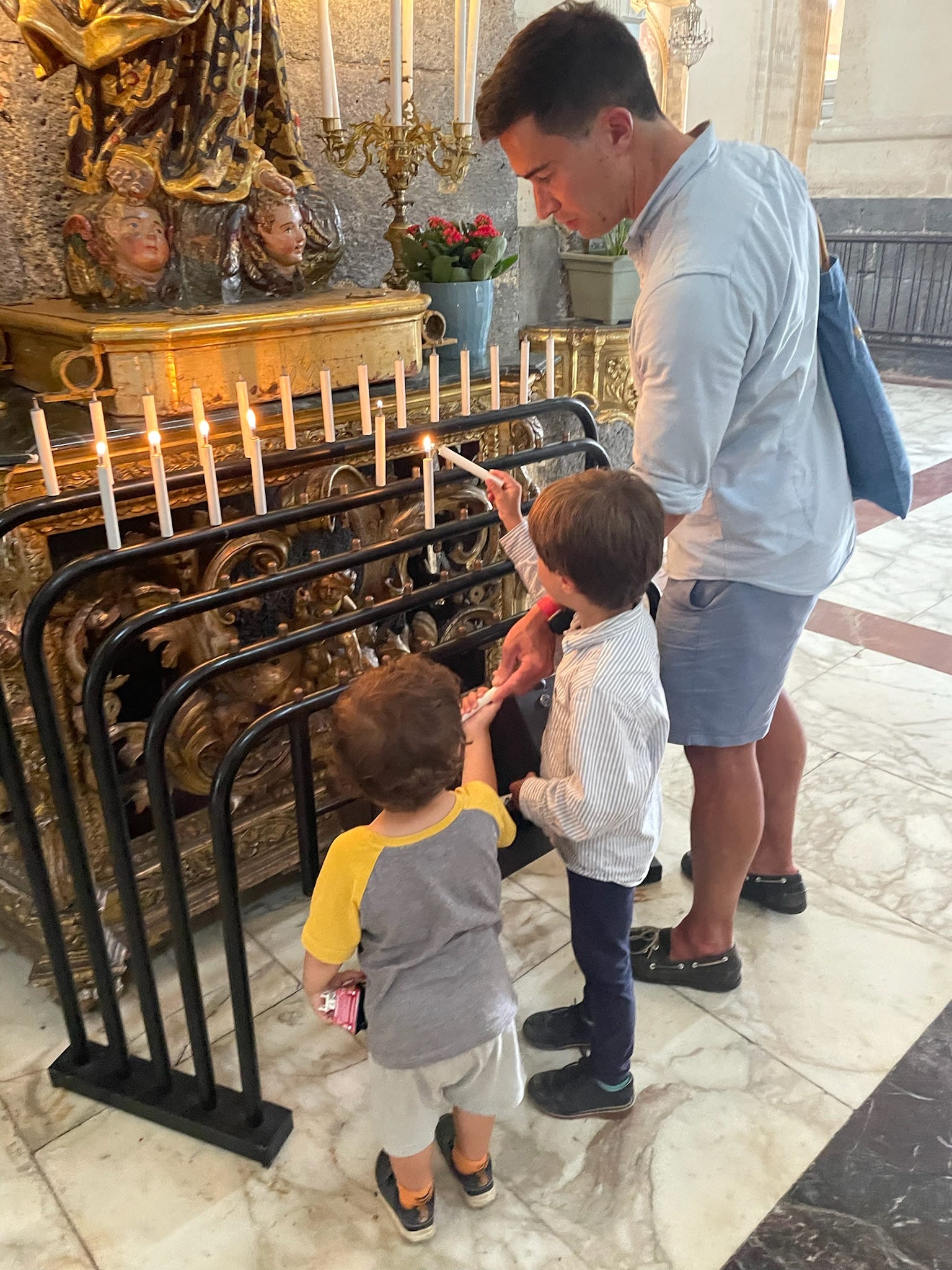
On the morning before our flight, I went for an early walk. I passed Roman ruins waking up to their 730,544th (or so) morning, and followed a group of middle-aged construction workers into a posh bakery and waited while they flirted like school boys with the shop attendant. I ordered twice as many pastries for breakfast as we needed, but it was the last meal before our trip died, and I carried them in their fancy box down Via Alessandro Manzoni with Etna smoking behind me. I picked up a succulent with purplegreen leaves that had fallen from a planter and put it in my water bottle with the others - a final souvenir. I stopped at a caffe for an espresso and stood next to a man with a thin moustache and light sunglasses who seemed as if he was trying to be seen.
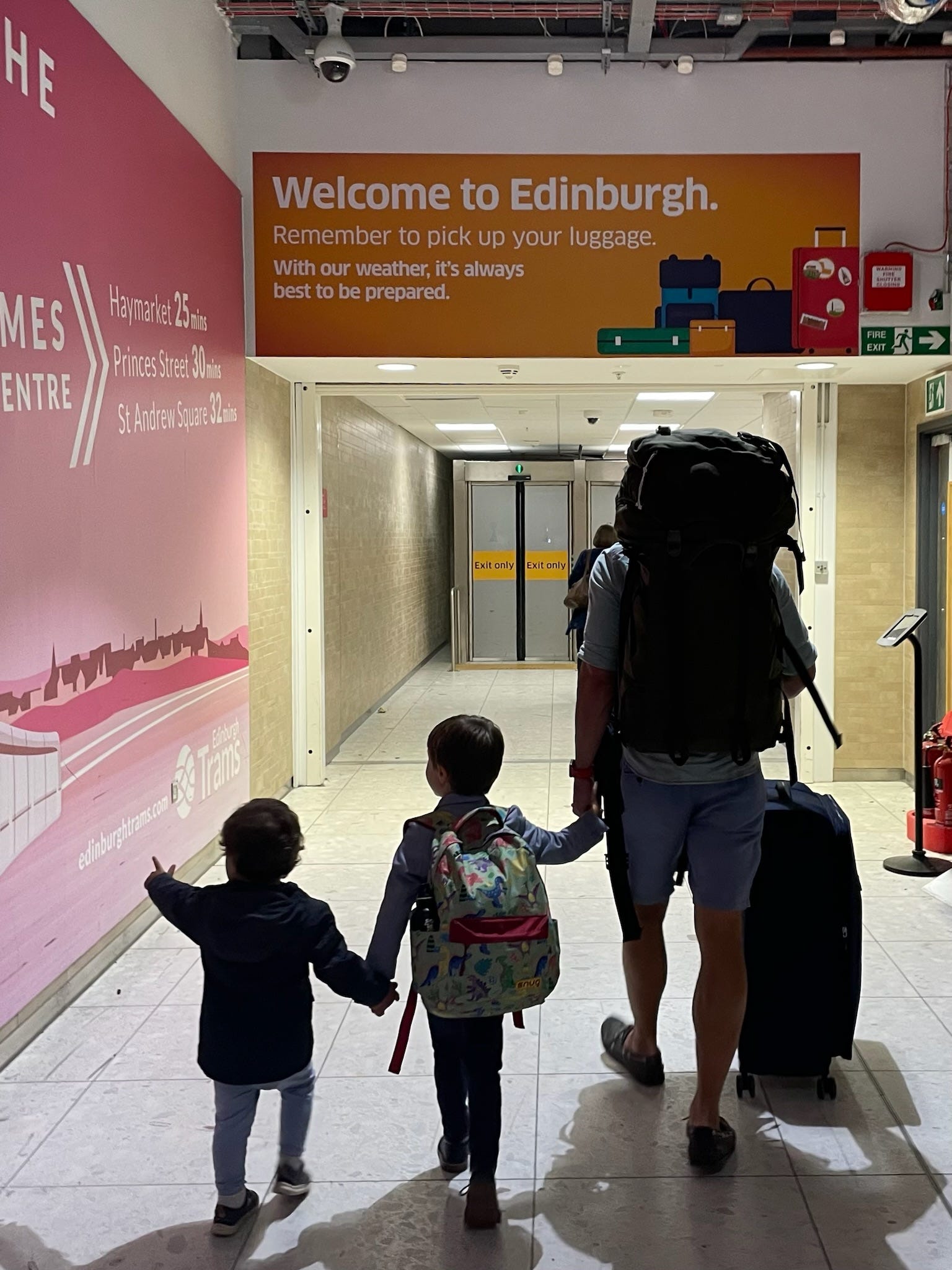
The taxi arrived. The driver took us around the gardens, then through the suburbs to the terminal.
And then we were passing through gates that testified silently that we had nothing to declare.
Our apartment was the same, just dustier. We unpacked, and I sorted all the plants into their new homes and souvenirs into their new places. I sent packages to Bianca and my sister. I brought the fabric to the tailor, who made a set of napkins. We searched through Italian cookbooks for Cacio e Pepe and Porchetta recipes, got books on pizza and pasta, and learned to use an ice cream maker. I stopped drinking Americanos and only drank espressos.
And got restless.
We have the tendency to look at trips as separate sections of our lives. There is a beginning – a boarding time, say – and end: our ETA, or perhaps that first moment we walk back into the office. And before and after these times, we experience the rest of our lives. The vacation is the fun part; the day-to-day part is drudgery, what we try to escape.
But it would be good to remember that what we experience in our every-day lives is a dream vacation to other people. I’m not just talking about living in San Diego, Miami, Boston, Paris, London, or Rome; plenty of people would love to get to someplace “normal” like Des Moines, or Buffalo, or…well, even Salt Lake City has a certain je ne sais quoi.
St. Augustine didn’t actually say, “The world is a book, and those who do not travel read only one page,” but someone did, and it now seems to be generally accepted. If we assume it is true, and we can agree that books teach us, assuming we can learn, and if we learn, we grow as people, then travelling, too, helps us to learn and grow.
Ralph Waldo Emerson also apparently wrote, “It’s not the destination, it’s the journey.” This, too, is often accepted as wisdom. But I’d argue that it isn’t about either the journey or the destination, because that is external; the real value is about who we become in our travels, both at home and abroad. Maybe we should focus on the journey, of course, but we need to be grateful for the product: ourselves.
And if Carlyle was right that we should not rely solely on formal education to learn, but that “the true university of these days is a collection of books,” and that it is important to continue to learn/read long after our formal school days are done, let’s push this further: if reading is critical, and the world is like a book, and to read the world we need to travel, then we need to keep travelling (and reading!) in order to keep learning and growing.
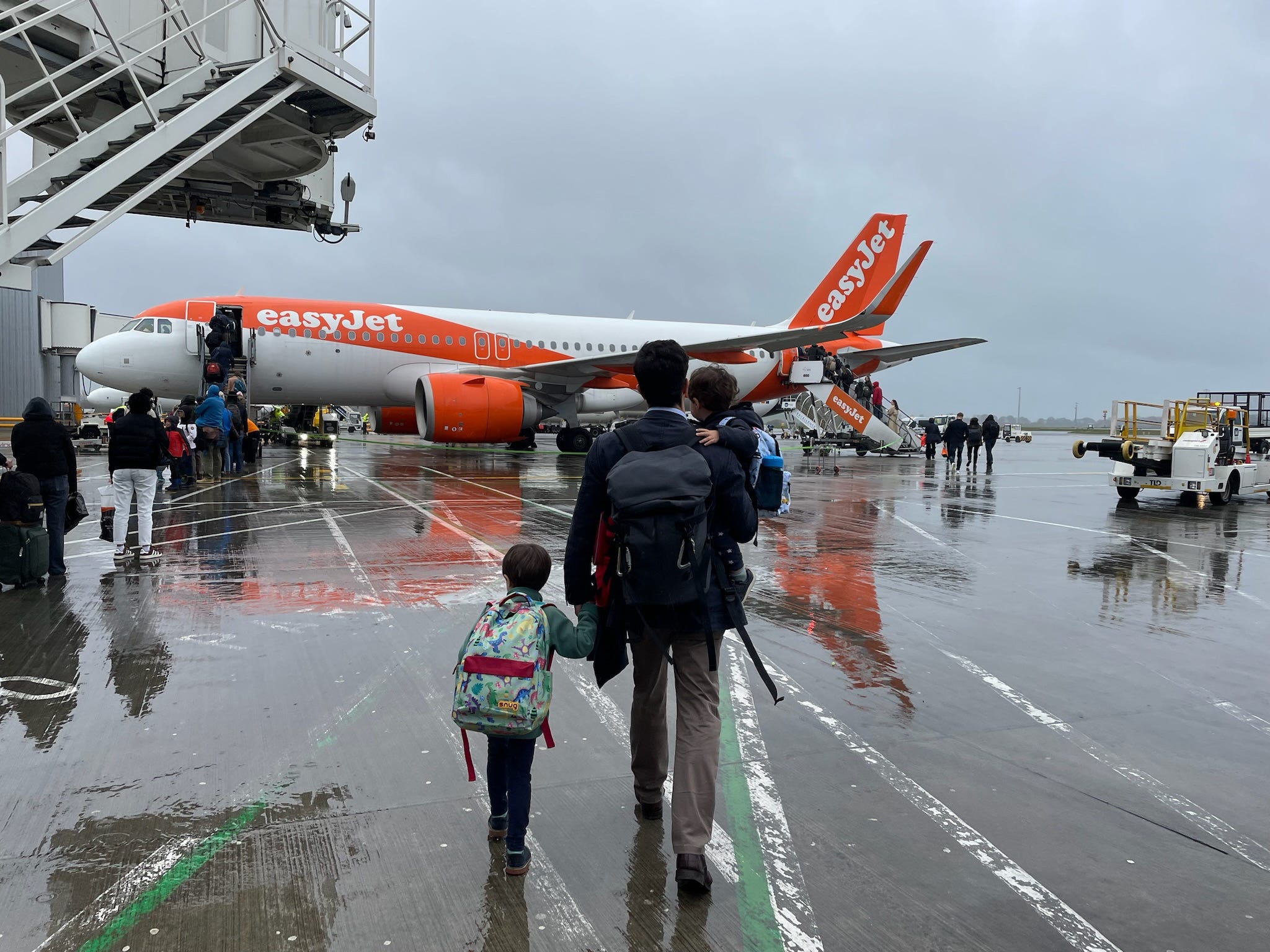
We wanted to find a capital city that would offer the kids a lot of places to play and give the adults a lot of culture. It needed to be cheap enough for us to stay a month, have a Brazilian Jiu-Jitsu club and a gym, good public transportation, good day trips, and bodies of water that the boys could play in to escape the heat. It would ideally have amazing food, a history of good coffee, a unique indigenous fermented beverage, a strong sense of history, beautiful architecture, a zoo, multiple museums, a brilliant literary tradition, good parks, and be a direct flight from Edinburgh.
And so we beat on.
Next stop: Budapest.
“We have no great war, no great depression. Our great war is a spiritual war. Our great depression is our lives.” - Tyler Durden
Great piece as always!! I loved the the the list of things that become so clear to us when we’re in new places. A great reminder.
Wonderful piece. I especially liked your accounting of your souvenirs, and how they linked to the life you lived.